
Reconstruct Mason County Former Owners
A prior-owner chain is a sequence of conveyances. No single address search returns it. Start with the current deed, then capture every citation needed to identify the same tract at each earlier step.
| Source | Years It Covers | Where Held | What It Shows |
|---|---|---|---|
| eCCLIX deed index | Most indexes described from 1795-present; online images mostly January 2004-present | Mason County Clerk / eCCLIX | Recorded grantors, grantees and transfer citations |
| Deed books and microfilm | Older and non-imaged record years | Clerk, KDLA and Kentucky microfilm catalog | Earlier conveyances and book/page links |
| Recorded plats | Varies by filing | Mason County Clerk | Subdivision, lot and boundary-history clues |
| Local-history collections | Gateway materials describe 1789-present holdings | Gateway Research Library and Mason County Public Library | Maps, tax lists, newspapers and contextual leads |
Treat the table as a working timeline. Fill it only from actual instruments. Keep the deed type with the book and page or instrument number, because the citation anchors every later step. That clause often names the earlier deed. The Mason County Clerk reports courthouse records and most indexes from 1795 to the present, with exceptions, and most instrument images online from January 2004 forward. The eCCLIX index shows the party route for locating an earlier grantor-grantee transfer.
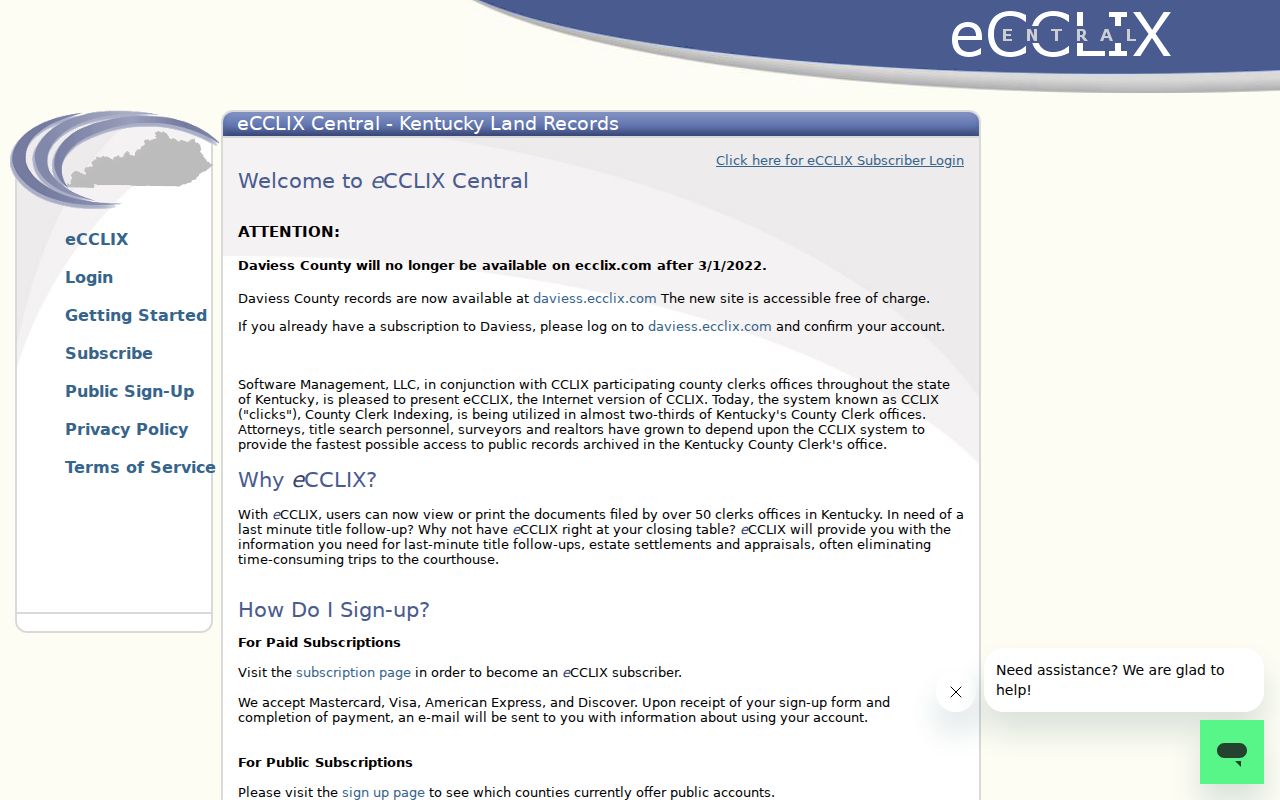
A live Mason search needs a subscription. Treat the example as a map of the index route, and confirm every selected entry against the actual recorded deed.
Go Back Through Mason's Grantor-Grantee Chain
The Kentucky Department for Libraries and Archives recommends a reverse method. Start with the modern deed, follow the source-of-title reference, run a grantor and grantee search, then compare legal descriptions. Rural Mason tracts reward this approach, since many are described by acreage, road, creek or adjoining owner rather than a lot number.
- Find the current acquiring deed and verify the subject legal description.
- Read its grantor as the next former-owner candidate and capture the source-of-title citation.
- Search that grantor as an earlier grantee in eCCLIX.
- Repeat until images end, then continue with index books, deed books or microfilm.
- Grantor
- The party transferring the recorded interest.
- Grantee
- The party receiving it.
- Reverse index
- An index organized from the grantor side of a transfer.
- Warranty deed
- A conveyance with stated title covenants.
- Quitclaim deed
- A transfer of whatever interest the grantor has, without the same warranties.
Cross Mason County's Online Image Cutoff
The Clerk separates two horizons. Online imagery is the shorter one. Most images begin in January 2004. Indexes and maintained records reach toward 1795, with exceptions, far past the image cutoff. The earliest fully searchable eCCLIX year is not publicly confirmed. Push the online index only as far as it reliably reaches, then use the Clerk's public counter, where indexes and public records may be inspected without a subscription, subject to copy charges.
Expect an offline handoff. Online images generally begin in January 2004; earlier former owners may require deed books, indexes or microfilm.
Prefer Book and Page Over a Repeated Name
A book and page citation beats a repeated surname. eCCLIX supports party, book and page, instrument and date approaches, though generally not a direct tax-lot or bill-number search. Match the citation on every step. Match the deed type and parties too. When a tract was divided, combined or corrected, note the acreage and exception language rather than forcing a straight name chain.
Follow Estate and Trust Branches in Mason History
Death and probate can break the seller-to-buyer pattern. Fiduciary transfers do the same. Wills, affidavits of descent, executor deeds and trustee deeds may explain why a former owner's name vanishes or shows up in a representative capacity. The Clerk records wills and related legal instruments. Probate copies come through Mason District Court at the Mason County Justice Center. When a deed mentions an estate, devise, court order or fiduciary, search both custodians.
Extend Mason County Former Owners Through Archives
Kentucky's microfilm inventory and KDLA research guides support the older deed-book stage. Log each offline finding. Note the county, series, reel, page and name searched. Record the access date as well. The Kentucky Gateway Museum Center Research Library describes original documents, deeds, tax lists, maps and newspapers for Mason and neighboring counties. Its archive is staff-retrieved, so send the precise deed citation and place clues.
Note: A library transcription is a research lead; compare it with the Clerk's recorded book and page.
Support Mason County Former Owners With Sale Notices
The Kentucky Historical Society finding aid shows uneven Maysville newspaper survival. Monitor issues survive from 1832 and 1835. Express runs cover 1857 through 1859. Its holdings also include scattered 1862 material, 1870s titles and late-1880s Republican items. Search a known former owner with terms like farm, road, commissioner's sale, administrator, affidavit of descent and notice to creditors. A notice can explain a transfer. It may supply a sale date, but the recorded deed remains the authoritative chain link.
Document Mason County Former Owners From Offline Sources
An offline finding should be reproducible. Record the institution, collection or series, and Mason County. Note the date span, volume or reel, and page or item number. Include the name searched, the legal-description clue and the access date. Ask whether a copy is certified or only for research.
The Mason County Public Library offers local history and a Kentucky Collection. It provides in-house Ancestry Library Edition and genealogy referrals. Gateway's staff-retrieved archive adds deeds, maps, newspapers and tax lists. KDLA and the Kentucky microfilm catalog help identify state-held series or reels.
The Clerk's book and page comes first. Compare any transcription, newspaper notice or tax-list entry against it. Supporting sources can explain an estate sale, an old farm name or a road call. They cannot replace a missing conveyance.
Gateway's Old Pogue material highlights an 1804 Collot map. It also marks a road from Limestone to Frankfort. Old deeds cite roads that no longer exist. Ask staff to check the map holdings. Then carry the place clue back to the deed-book index. Do not treat the map as a boundary record.
An estate or commissioner's-sale notice may name heirs. It may also give a sale date before the next deed appears. Preserve the lead with its newspaper title, issue date and reel or item citation. Then search the Clerk index around the stated event. The notice guides you. The recorded transfer still governs the chain.
Know How Far Mason Ownership Records Go
Mason County's record horizon reaches back to 1795, a remarkably deep span of ownership history. That depth is no promise, though. Not every instrument, index entry, or image survives or can be searched, so early land questions may push past county deed books entirely. Answers can sit instead in state land records, patents, or regional archives.
Use history responsibly. Trace former owners for house history, estate work and property diligence, never to locate, stalk or harass a living person.
Historic maps help decode older property records. Gateway highlights an 1804 Collot map showing a road from Limestone to Frankfort. It is useful context when a deed names a road or landscape feature that no longer exists. The map cannot establish a modern boundary, however. When the trail reaches a state patent or land grant, record that transition separately from the county deed chain. Note which repository you consulted.
Resist forcing every historical event into a deed row. A mortgage, assignment, lien, release, easement, or correction can affect the parcel record. It does so without creating a new owner of record. Preserve it as a related event when it explains a reference. Then resume the former-owner timeline at the next actual conveyance. The Mason County recording-fee list reinforces that distinction: deeds, mortgages, plats, easements, liens, and releases are each separately recorded instruments. One parcel can accumulate all of them. Classify every document before extracting names. That keeps a lender, lien claimant, or easement holder from slipping incorrectly into the ownership chain.
Some historic transfers arise from probate, foreclosure, or a commissioner's sale. In those cases, compare the deed with the matching local court file. Mason court copies can be requested through the Circuit Court Clerk at the Justice Center. A docket reference or newspaper notice can supply the case and date. But the recorded conveyance is what links grantor to grantee in the chain.
Keep unresolved years visible. A gap is a prompt to inspect another index, volume, reel, or court file. It is never permission to infer a former owner from proximity or family name alone.