
What Mason County Deed Records Convey
Every deed transfer in the county starts with the Mason County Clerk Legal Records Department. The department serves as the recording custodian for deed records. Read a deed closely. You will find the parties, the recording reference, and legal-description clues for the transfer. The deed type and its wording determine what interest actually passed. Mortgages and liens work differently. They record an encumbrance against the property rather than a new owner of record.
| Deed Type | What It Does | Common Use |
|---|---|---|
| General warranty deed | Conveys the stated estate with broad title covenants | Arm's-length sales |
| Quitclaim deed | Conveys whatever interest the grantor has without broad warranty | Family or title cleanup transfers |
| Executor or fiduciary deed | Conveys through an authorized estate representative | Probate-related transfers |
| Master commissioner deed | Documents a court-directed conveyance | Judicial sales |
| Tax deed | Documents a transfer arising from the delinquent-tax process | Tax-sale property |
Read the full instrument, including its source-of-title clause. An index entry is only a finding aid, after all. Recording gives notice of the document, not a guarantee that no competing claim exists.
Mason's 1795 Record Horizon and 2004 Image Line
Courthouse records run from 1795 to the present. County indexes reach back to 1795 with some exceptions. Most instrument images are online from January 2004 forward. Those are two different claims, and the gap matters. An older deed can sit in the county index or in a deed book. No web image may exist for it. The earliest fully searchable eCCLIX year has not been publicly stated. The eCCLIX login page opens the modern index and its images.
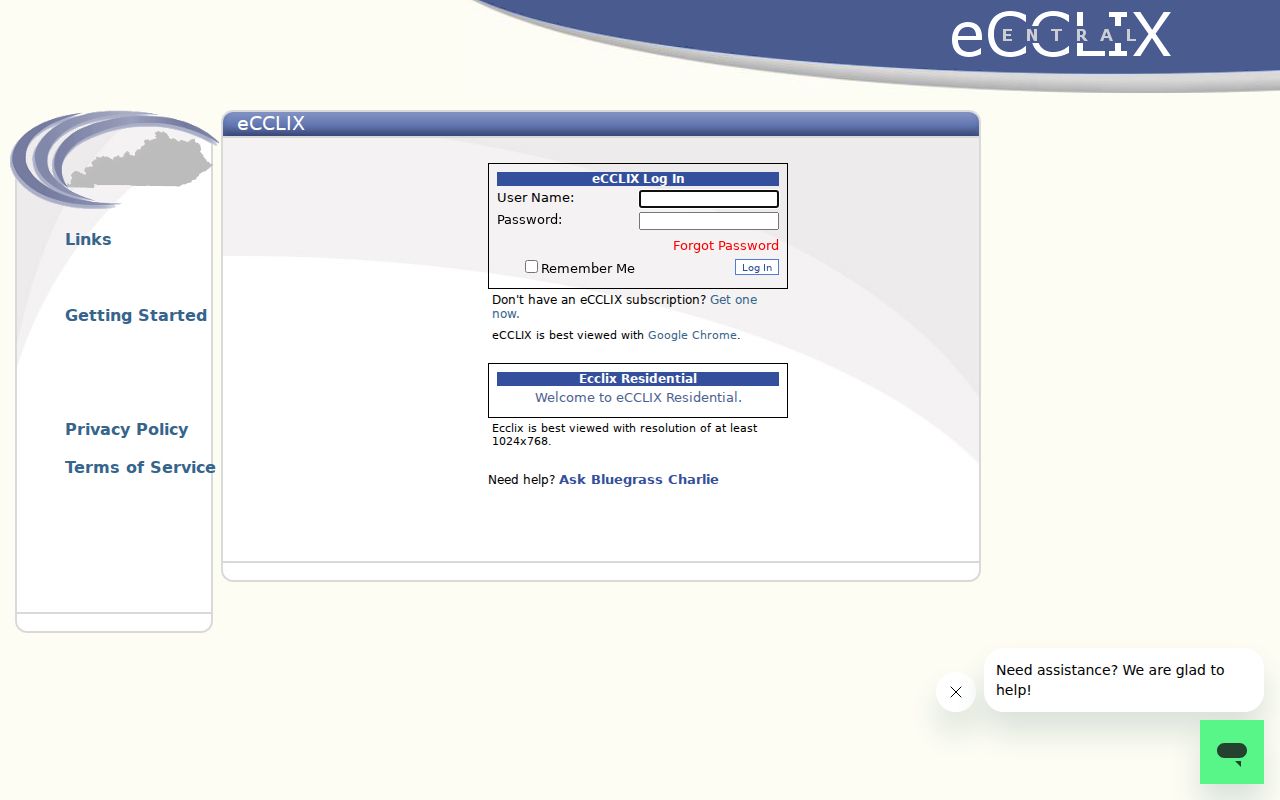
That login screen makes the practical point clear. Arrive with a party name or recording citation in hand, and keep the courthouse as your fallback.
Search Mason Deeds by Party or Recording Reference
| Index key | What to enter | Best use |
|---|---|---|
| Party | Grantor, grantee, or other indexed name | Building the transfer chain |
| Book/page | A citation from a deed or parcel card | Opening a known record |
| Instrument number | The assigned recording number | Retrieving a specific modern filing |
| Date range | A recording window | Narrowing common names |
Vendor guidance for eCCLIX says bill-number and general tax-lot searches are not direct search modes. Start instead with the Mason County property lookup. It gives you the owner spelling or deed reference, and you carry that clue straight into the deed index.
Walk the Mason County Grantor-Grantee Index Backward
A reverse chain always begins with the latest known deed. The current owner shows up as grantee. Whoever transferred to that owner appears as grantor. From there, the source-of-title reference or the legal description usually supplies the citation for the next link back.
- Find the current acquisition deed with the owner as grantee.
- Copy its grantor, date, book/page or instrument number, and legal-description clues.
- Search that grantor as an earlier grantee and compare the same land description.
- Repeat until the web index stops, then continue in reverse indexes, deed books, or microfilm.
- Grantor
- The party conveying the stated interest.
- Grantee
- The party receiving that interest.
- Chain of title
- The linked sequence of conveyances for the same land.
- Book/page and instrument number
- Two recording references used to retrieve documents from different eras.
Recording Fees Show How a Mason Title File Grows
The Clerk's published recording-fee schedule prices each instrument type: $50 for a deed, $80 for a mortgage, $126 for a mortgage with assignment, $50 for a plat, $50 for an easement, $46 for a correction deed, $46 for a common lien or release, and $96 for a fixture filing. These are recording charges only. They promise nothing about online-image or certified-copy cost.
One parcel can pile up a deed, mortgage, assignment, modification, release, easement, correction, plat, and tax-lien record over the years. Search releases as carefully as you search liens. A release can show a recorded claim was discharged, though it cannot prove every obligation or unrecorded claim has vanished.
DOC ALERT Watches New Mason Filings by Name
The Mason County Clerk advertises DOC ALERT. It is a free email service that flags deed and mortgage filings indexed under a registered personal or business name. Registration takes just a name and an email address. Treat each alert as an early signal. It does not prove a filing is fraudulent or valid.
If an unexpected notice lands in your inbox, save the filing reference and contact the Clerk. Compare the parties, the legal description, the acknowledgments, and the prior title citation. Never rely on the email alone to judge ownership.
Deed Books, Microfilm, and Mason's Local Collections
When images are missing or the chain runs old, inspect the Clerk's deed books and reverse indexes. You can also turn to Kentucky's microfilm inventory. KDLA's land-record guidance recommends a simple discipline. Follow the modern deed's source-of-title reference backward. Check grantor and grantee names. Confirm the legal description at every link.
The Kentucky Gateway Museum Center Research Library holds regional deeds, maps, tax lists, and newspapers. It also holds original documents from 1789 forward. Staff pull its archive materials rather than letting visitors browse. A local transcription or map makes a useful lead. Reconcile it against the Clerk's recorded book and page.
Get a Mason County Deed Image or Certified Copy
Use eCCLIX when the image is online and account access fits your needs. Otherwise visit the Clerk at 27 West 3rd Street, Maysville, call 606-564-3341, or submit the Clerk's open-records request form. Supply party names, an approximate recording date, the document type, and a book/page or instrument number. Say whether you want inspection, an ordinary copy, or a certified copy.
The Clerk's printable-forms instructions state that completed originals may be mailed or brought in person, never emailed or faxed. Confirm current copy cost and delivery method directly with the office. The published instrument-recording schedule answers a different fee question.
Recorded, not guaranteed. Mason County deed records show instruments accepted for recording. They are not a title opinion, and unrecorded interests or indexing errors may require professional examination.
Read the Instruments Around a Mason County Deed
A deed rarely stands alone. In the Mason County index, the same parties reappear in mortgages, assignments, releases, easements, plats, fixture filings, liens, and correction deeds. Each instrument answers a narrower question. A mortgage records a security interest, an assignment can move that interest, and a release can discharge the referenced claim. None of this changes the deed grantee.
Mason County's fee schedule shows the variety. A deed costs $50 to record. A mortgage runs $80, and a mortgage with assignment runs $126. A plat or easement costs $50 each. A correction deed, common lien, or release runs $46, and a fixture filing runs $96. These published amounts are recording charges by document type; confirm the cost of an online image or certified copy with the Clerk.
Read related instruments against one another. Match every release to the recording reference of the lien or mortgage it purports to discharge. Compare a correction deed with the original deed and the current legal description. For an easement, note the benefited and burdened land. When a plat is cited, retrieve it and match the lot, block, road, dimensions, and subdivision name. Index proximity alone does not establish that two filings affect the same parcel.
Tax liens follow their own timing. The Sheriff handles the current collection period, while unpaid bills move to the Clerk after April 15 as certificates of delinquency. Those certificates, assignments, notices, and releases can appear in the recorded trail. Match the tax year and parcel. An older delinquency can coexist with a current assessment or a later deed.
Resolve Breaks in a Mason County Deed Chain
A clean chain of title breaks for many reasons in Mason County: estates, trusts, court orders, master commissioner sales, tax process, or entity conversion. Search the decedent, fiduciary, trust, or business name in every party role. The Clerk's forms can bridge the gaps. Affidavits, conversion material, assumed-name filings, liens, and releases often connect names that the land index stores differently.
Probate property takes extra steps. Request the Mason court file with the decedent's name, case number, filing period, and fiduciary if known. Then find the executor, administrator, or fiduciary deed in the land index. A will or probate order explains authority. The recorded conveyance still supplies the deed-chain link. CourtNet can help identify a case, Kentucky Courts directs copy requests to the local Circuit Court Clerk, and older files may sit in archives or be trimmed by retention schedules.
Judicial sales need the whole trail. Do not stop at the complaint or sale notice. Follow the case through the order, judgment, commissioner's report, and master commissioner deed. In a tax sale, separate the certificate of delinquency and its assignment from any eventual deed. For a business owner, Kentucky Secretary of State filings clarify an entity's name or conversion. The recorded instrument still holds the property interest.
Old Mason County deeds often skip addresses entirely. They describe land by acreage, a road, a creek, a neighboring owner, or a prior deed reference. KDLA's reverse-chain method works well here. Start with the modern deed, copy its source-of-title clause, and search that grantor as an earlier grantee. Verify the land calls, then step back again. When online images stop, request the deed book or use Kentucky's microfilm inventory.
Gateway Research Library adds local context through maps, deeds, tax lists, newspapers, and original documents, including an 1804 Collot map and road-from-Limestone-to-Frankfort material that helps decode historic geography. Kentucky Historical Society finding aids identify fragmented Maysville newspaper runs where sheriff sales, estate notices, and land advertisements survive. Treat these as leads. They never replace the Clerk's recorded deed.